Geotechnical drilling rigs
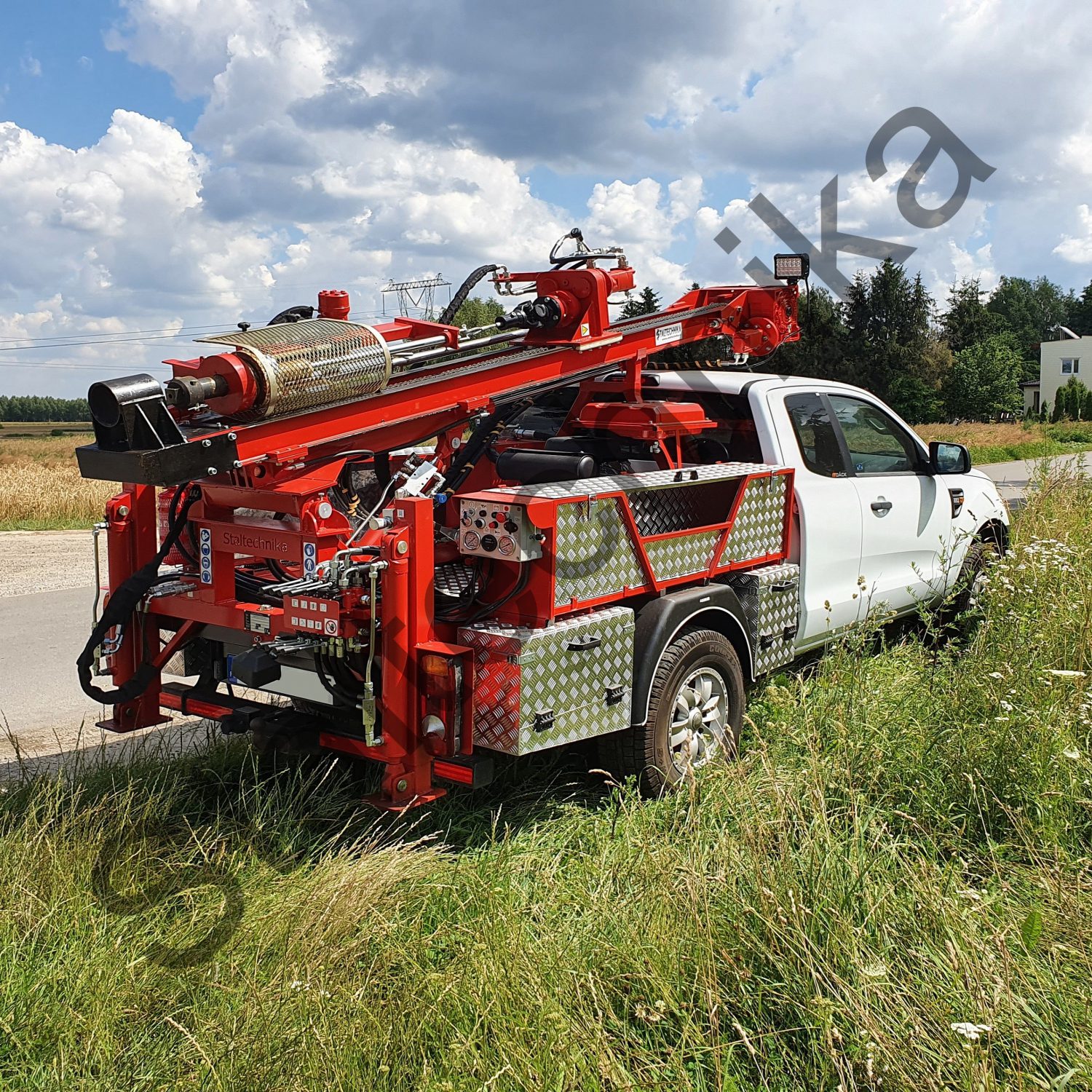
Pick-up truck-mounted WSG-P/WSG-W/WSG-B drilling rig (up to 3.5 t)
The pick-up mounted drilling rig enables the execution of geological boreholes with a diameter of up to Ø 160 mm and a depth of up to 35 m, offering a mobile solution for soil investigations and compatibility with the SGB-50 dynamic penetrometer.
See more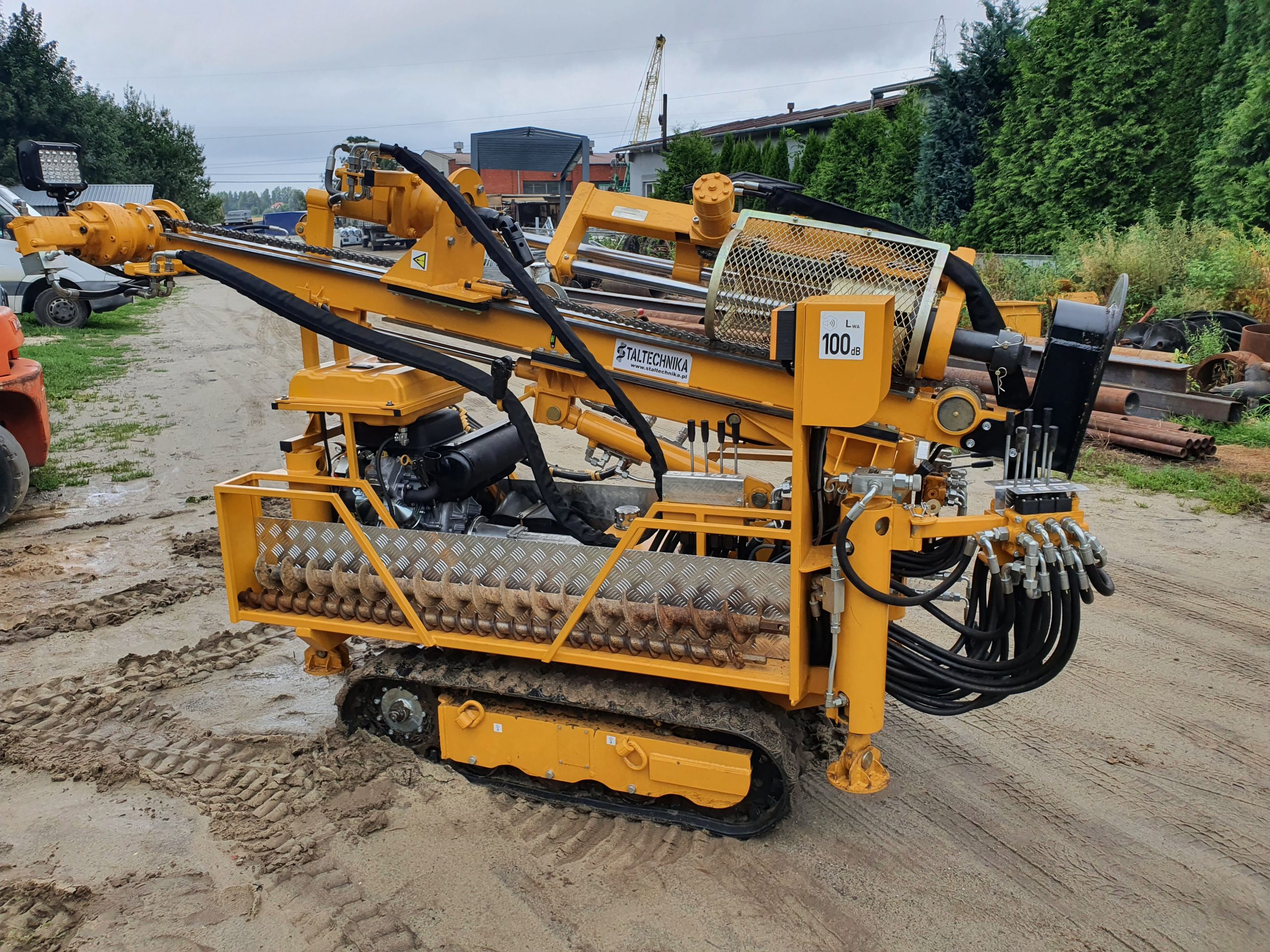
Self-propelled WSM-80 Mini Geolog A drilling rig
WGB “Mini Geolog A” hydraulic drilling rig for geotechnical applications, on a crawler undercarriage.
See more
Crawler-mounted WGB "Mini Geolog B" drilling rig
A compact hydraulic drilling rig on a crawler undercarriage with a width of 900 mm and a length of approximately 1300 mm, designed for geotechnical applications.
See more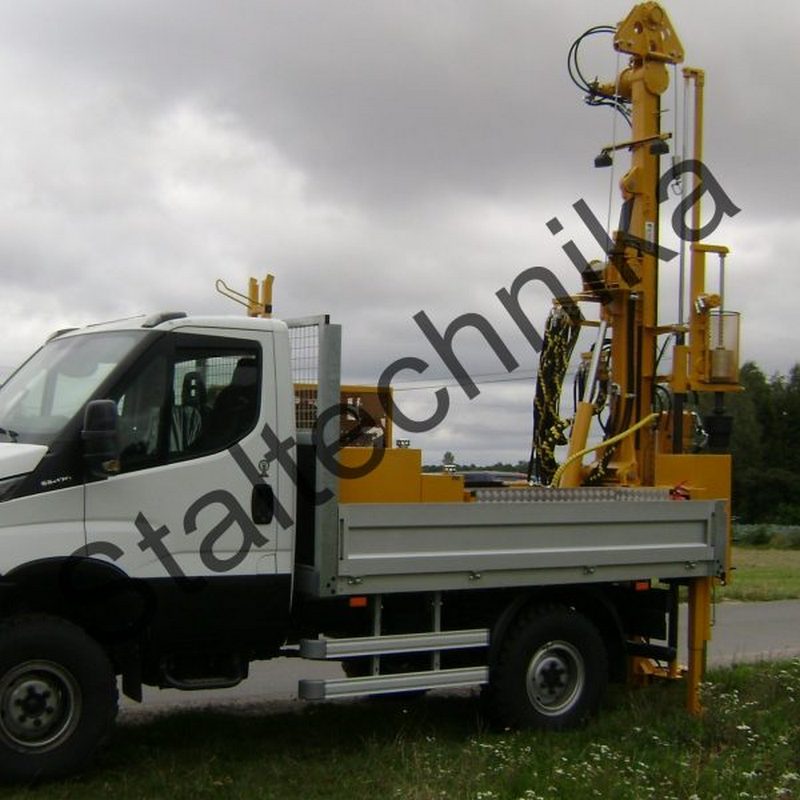
Truck-mounted WSG-250 drilling rig
The drilling rig, mounted on trucks with a GVW over 3.5 tons, is equipped with a 42 kW diesel engine, a larger mast, and a hydraulic system powering accessories such as a bailing winch, winch, and geological penetrometer.
See more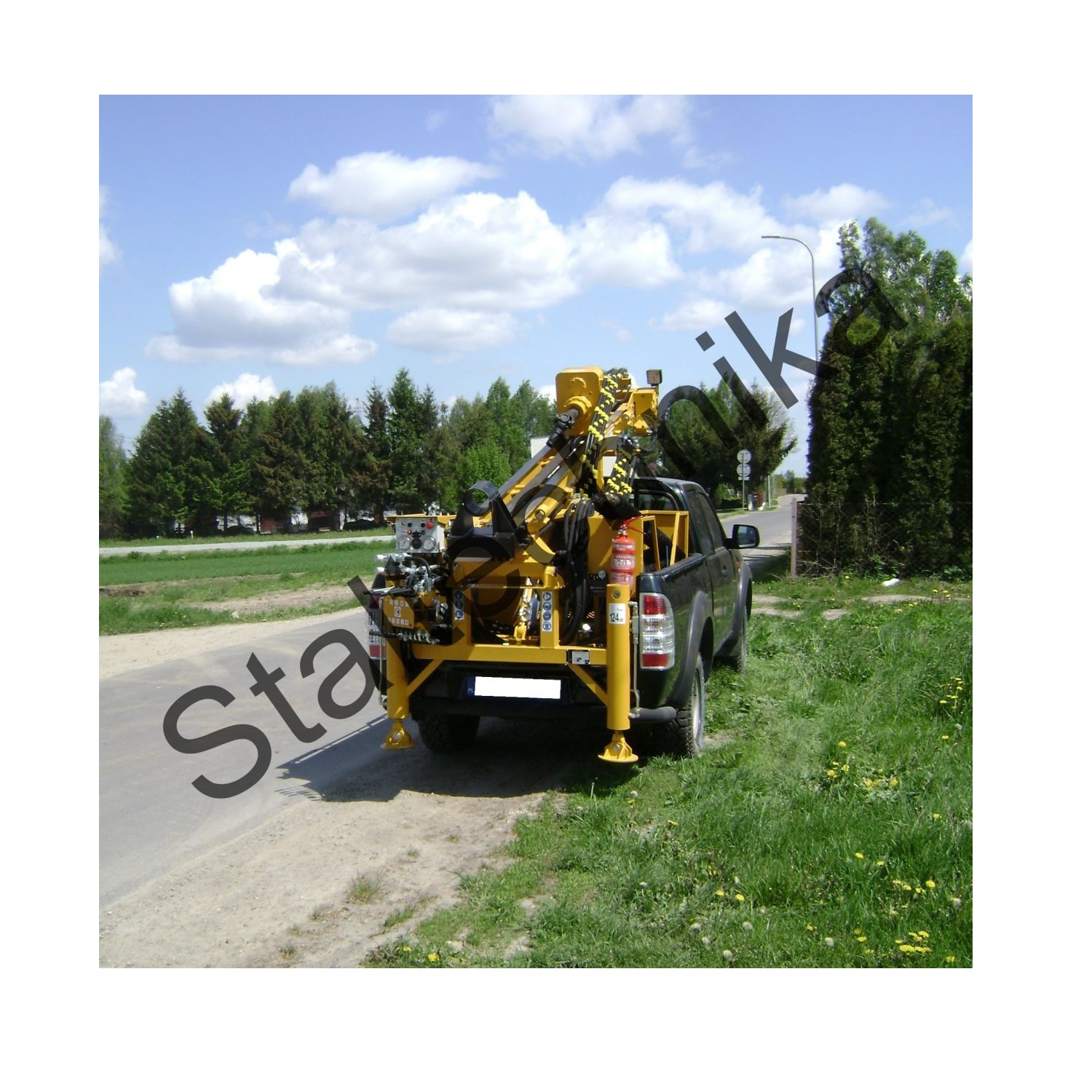
Pick-up truck-mounted WSG-WU rotary-percussive drilling rig (up to 3.5 t)
The WSG-WU drilling rig, equipped with a rotary-percussive drilling module, enables auger drilling and taking undisturbed soil samples while maintaining the structure, moisture, and grain size of the soil.
See more
WSG-WU rotary-percussive drilling rig
A drilling module called a rotary-percussive drill head is mounted on the mast of the WSG-WU drilling rig.
See more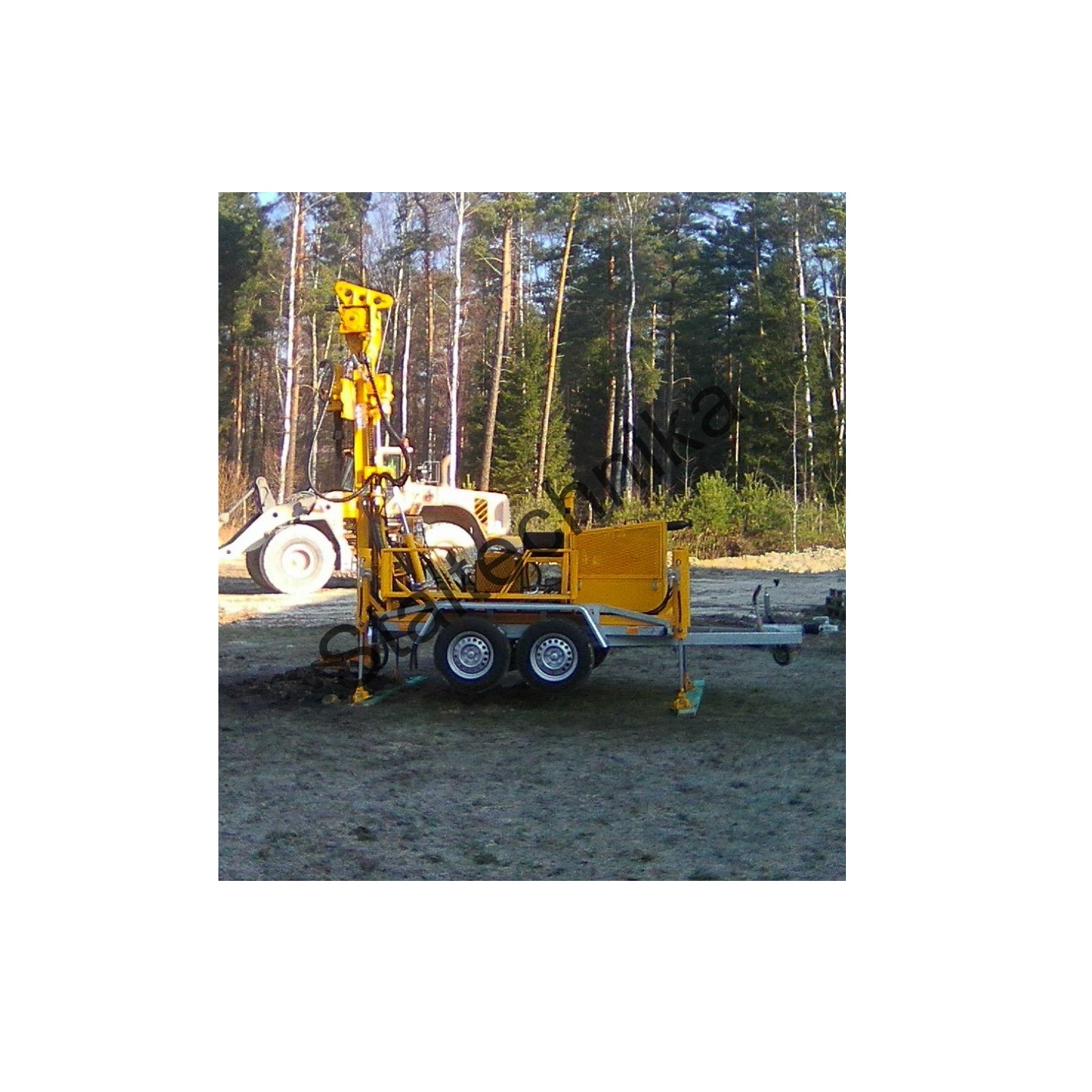
Trailer-mounted WGD-160 drilling rig
The trailer-mounted drilling rig enables auger drilling from Ø 110 to Ø 160 mm and casing drilling up to Ø 168 mm in 2 m sections, used in geological soil investigations.
See more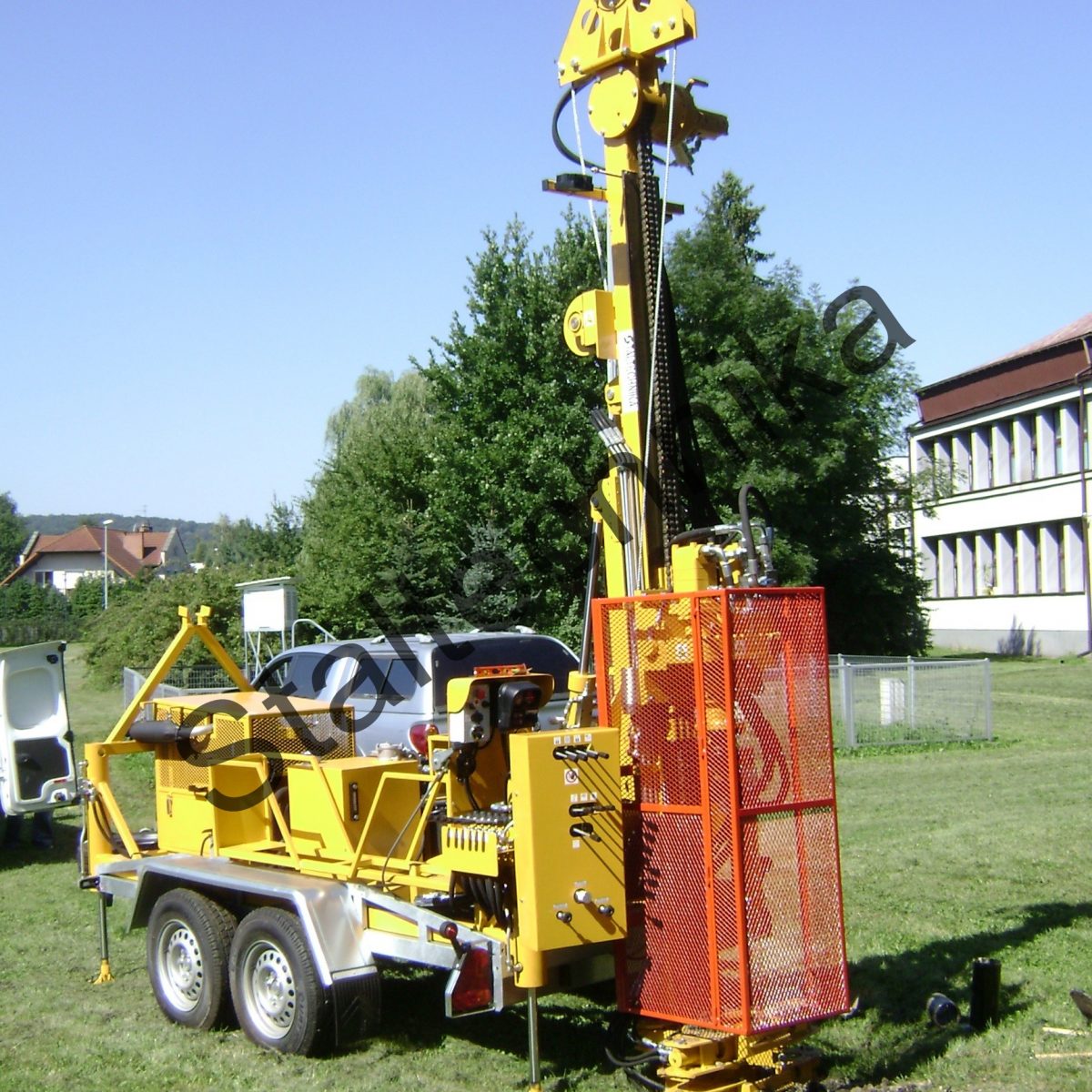
Trailer-mounted WGD-220 drilling rig
The trailer-mounted WGD-220 geotechnical drilling rig enables auger drilling from Ø 110 to Ø 180 mm and casing drilling up to Ø 220 mm in 1.5–3 m sections.
See more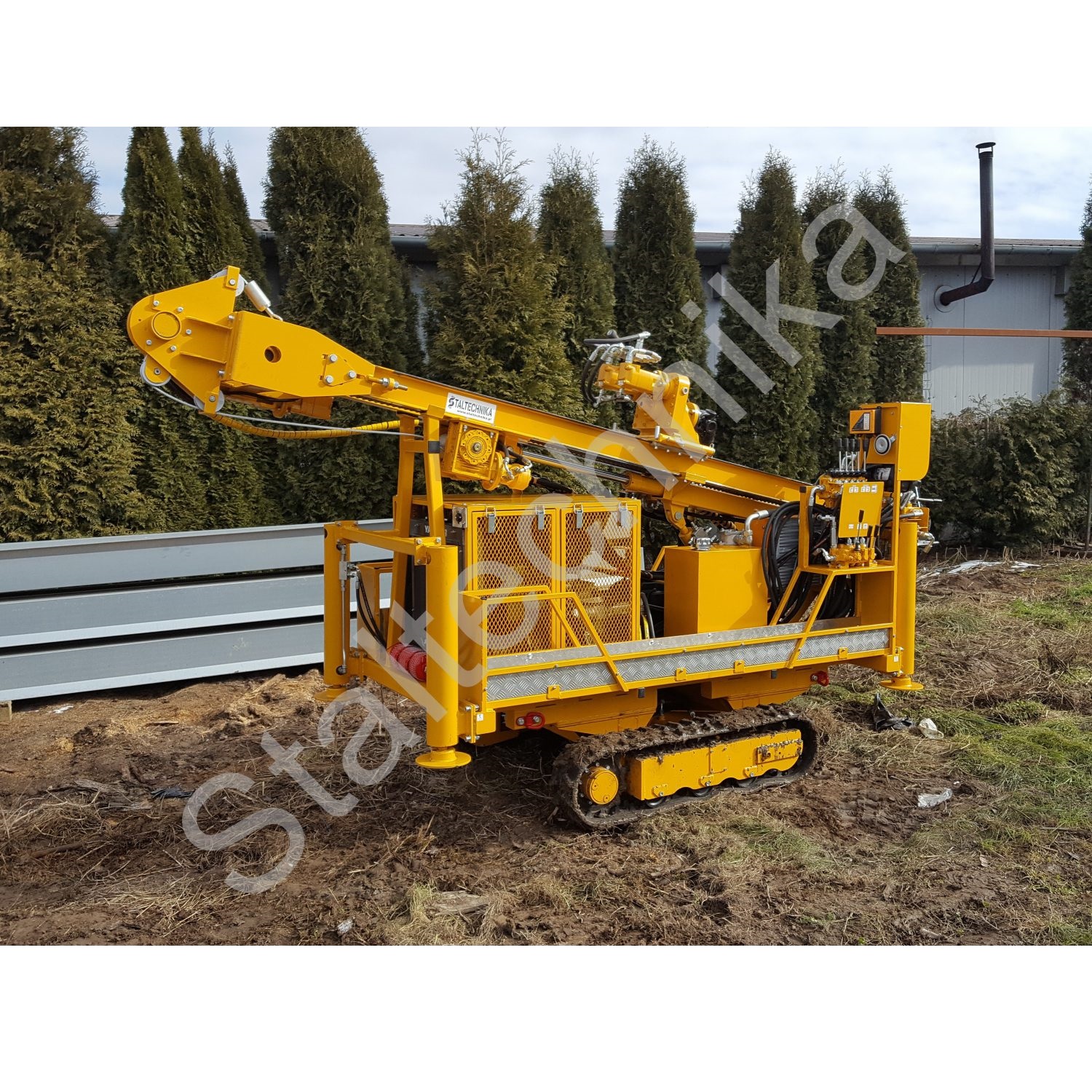
Crawler-mounted WGG-G-230 drilling rig
The WGG-G crawler drilling rig is used for executing small-diameter geological boreholes up to Ø 300 mm and drilling in steel casings used, among other things, for piezometer installations.
See more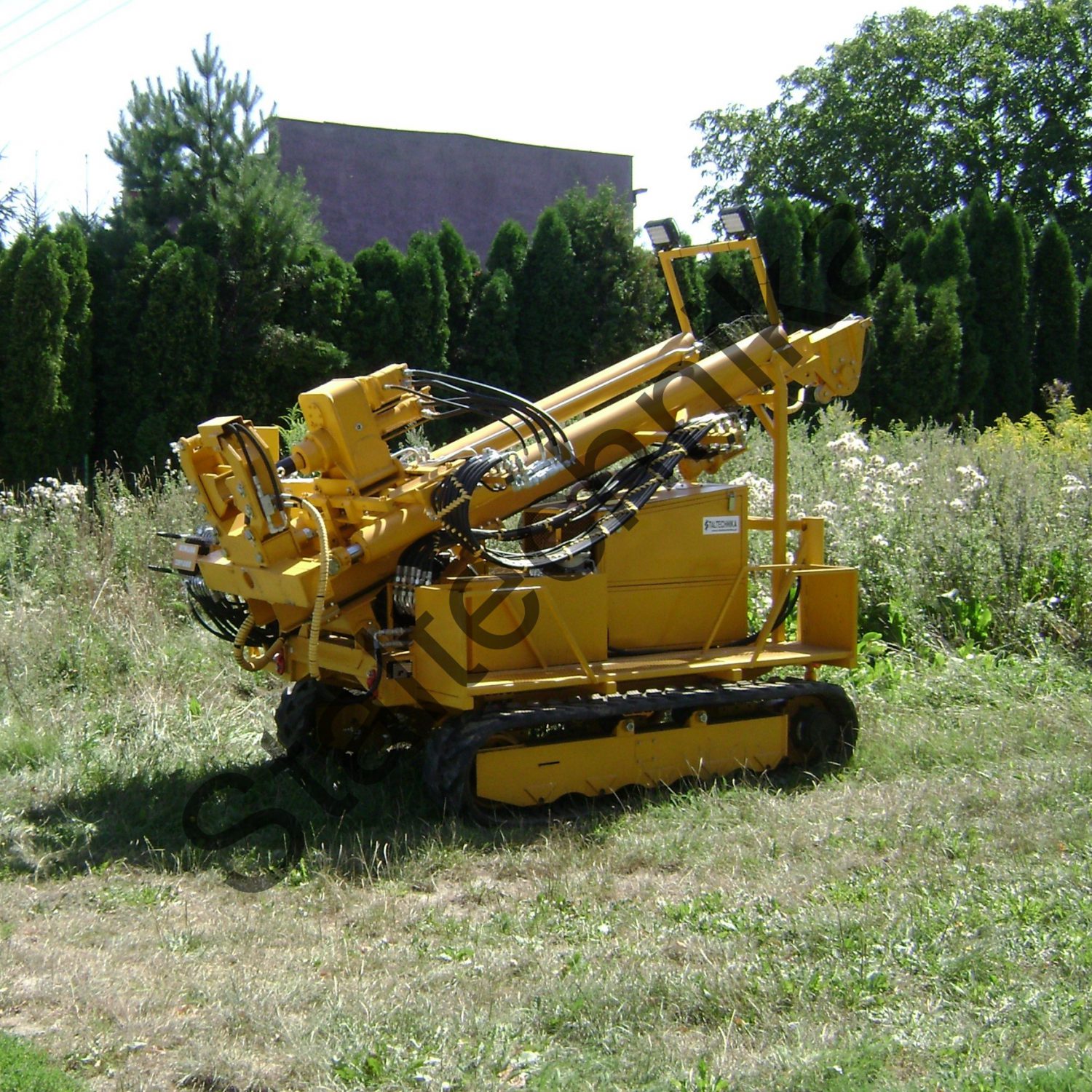
Crawler-mounted CPT/CPTU static penetrometer
The WGG-GS static penetrometer is a mobile machine combining the functions of a CPT/CPTU penetrometer and a geotechnical drilling rig, designed for testing soil parameters, geological drilling, and sampling even in difficult terrain.
See more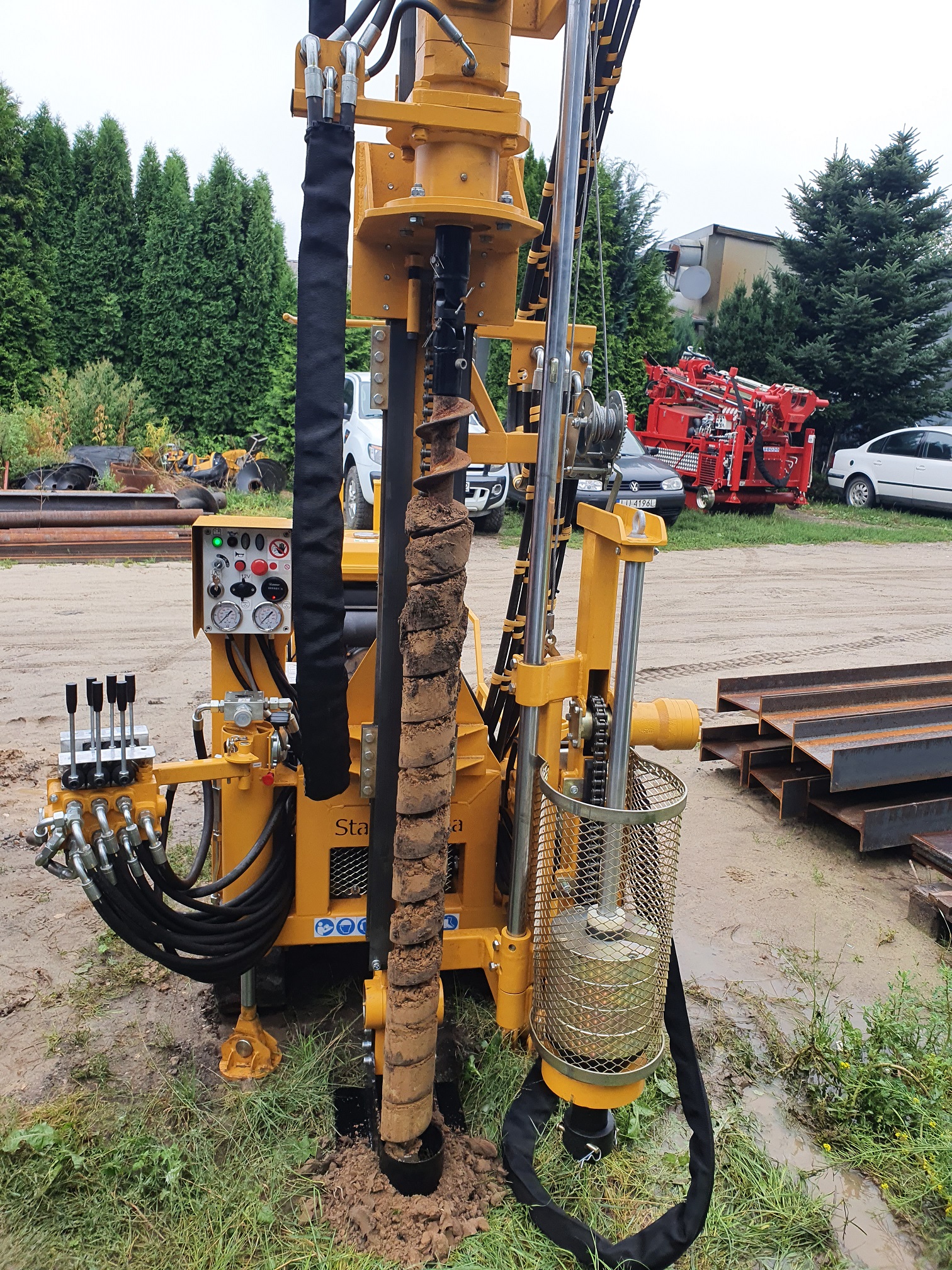
SGB-50 DPH dynamic penetrometer
The SGB-50 dynamic penetrometer is designed for geotechnical investigations using the DPL, DPM, and DPH dynamic probing methods and can be mounted on any geological drilling rig.
See more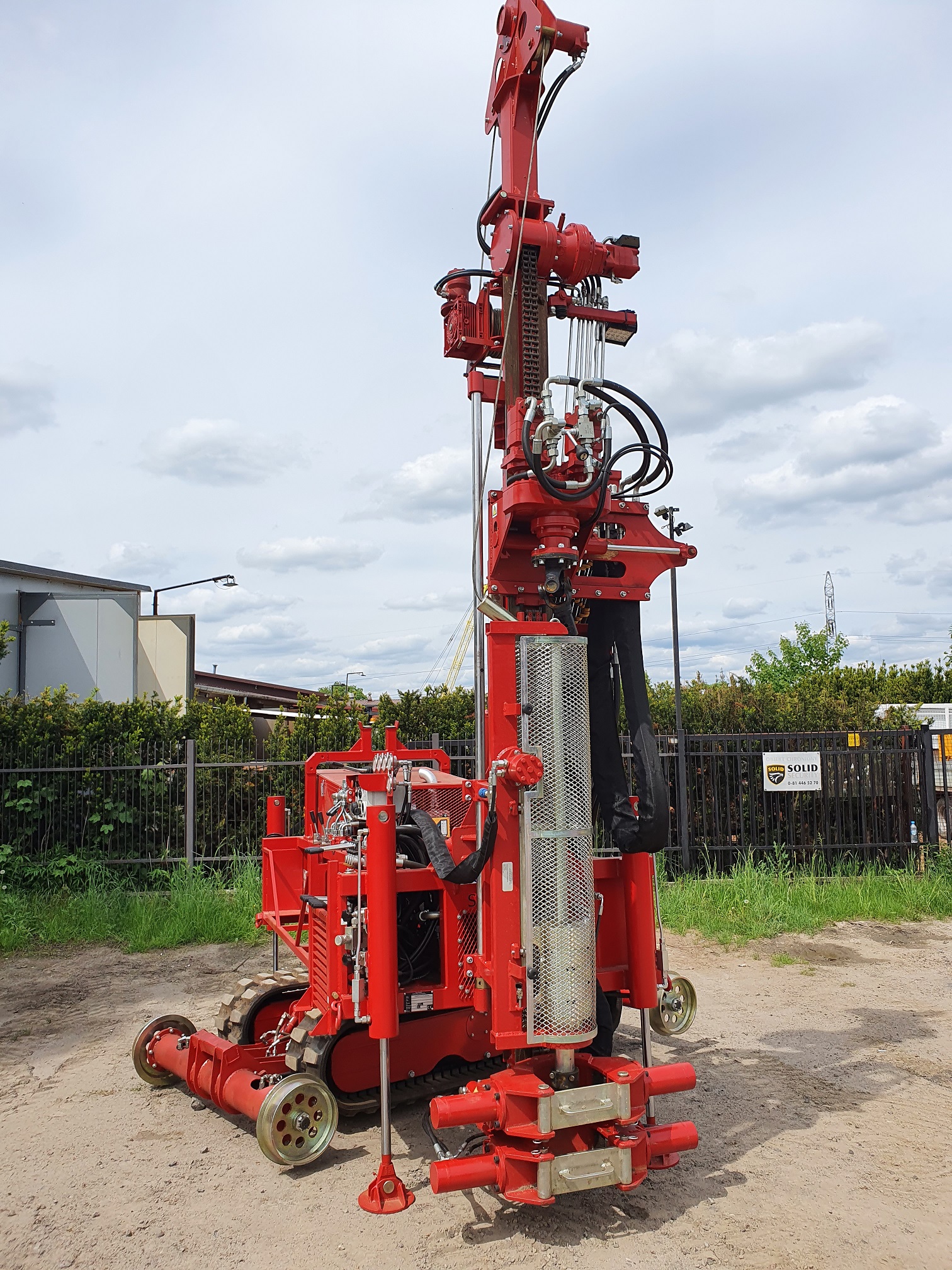
SGB-60 DPSH dynamic penetrometer
The SGB-60 dynamic penetrometer enables geotechnical investigations using DPL, DPM, DPH, and DPSH methods and works with any geological drilling rig in accordance with applicable standards.
See moreGeotechnical drilling rig – how to choose the right model for soil investigations?
Staltechnika, based in Majdan Krasieniński near Lublin, is a Polish manufacturer of geotechnical drilling rigs, designing and producing these machines in its own facility. They are used for drilling vertical boreholes in the ground, taking samples, performing dynamic and static probing, as well as installing piezometers and inclinometers. We offer a complete line of equipment, from compact crawler machines to truck-mounted models, adapted to every terrain and depth range. Ask for an offer or select a model below.
When is a geotechnical drilling rig necessary?
Geotechnical investigations are obligatory in Poland under the Building Law and the Regulation on determining geotechnical conditions for founding building structures. Every construction investment of the second and third category requires the preparation of geotechnical documentation, and an appropriate geotechnical drilling rig is necessary for its creation.
In practice, geotechnical drilling rigs are used for:
- Subsoil investigation prior to the construction of single-family houses, industrial halls, roads, and bridges,
- Undisturbed sampling for laboratory testing,
- DPH and DPSH dynamic probing evaluating the degree of soil compaction,
- Installation of monitoring networks at landfills and landslide areas,
- Environmental assessments required when designing wastewater treatment plants and retention reservoirs.
According to Prof. Leonard Runkiewicz from the Building Research Institute (ITB), who analyzed data on construction failures and disasters from 1962–2018, insufficient investigation and incorrect assessment of the subsoil are among the most frequent causes of design errors leading to hazards and disasters (Przegląd Budowlany 5/2020). Therefore, a properly selected geotechnical drilling rig is not a cost, but a reduction of the risk of faulty foundations.
What types of geotechnical drilling rigs do we distinguish?
Geotechnical drilling rigs are divided primarily by the mounting method and undercarriage, because it is mobility and terrain accessibility that determine which machine will perform well on a given project. Below we discuss each type from the perspective of its actual advantages and limitations.
Pick-up truck-mounted geotechnical drilling rigs (up to 3.5 t GVW)
These are the most frequently chosen geotechnical drilling rigs by companies carrying out standard investigations for developers and road builders. They are mounted on the cargo bed of a pick-up truck with a GVW of up to 3.5 tons, which means that a category B driving license is sufficient to drive them. The machine has its own internal combustion engine powering the hydraulic system, making it fully autonomous.
Staltechnika offers four variants in this series:
- WSG-P – drilling up to Ø 130 mm, depth 15–20 m, torque 1280 Nm, pullback force 26 kN. Ideal for typical investigations for single-family housing.
- WSG-W – drilling up to Ø 160 mm, depth 20–30 m, torque 1460 Nm (or optional two-speed rotary head 1080/2160 Nm), pullback force 36 kN. A popular choice for geotechnical laboratories carrying out standard orders.
- WSG-W(M) – drilling up to Ø 160 mm, depth up to 35 m (with Ø 110 mm auger), two-speed rotary head torque 1700/3400 Nm, thrust / pull-down and pullback force 42 kN, petrol engine 40 HP. A reinforced variant of the WSG-W for companies that regularly encounter more difficult soils or need greater depth without switching to a heavy truck. Mounting the SGB-50 penetrometer is possible on vehicles with sufficient payload capacity.
- WSG-B – drilling up to Ø 160 mm, depth 25–35 m, torque 1780 Nm, pullback force 42 kN. Equipped with a bailing winch, winch, pipe clamp, and rig sliding mechanism, enabling casing drilling. Best for more difficult soils and deeper boreholes.
The WSG-P and WSG-W models can be equipped with the SGB-50 (DPH) dynamic penetrometer, allowing probing to be carried out on the same vehicle as drilling.
WSG-250 truck-mounted geotechnical drilling rig (over 3.5 t)
When a project requires drilling to a depth of 40 m with a diameter of Ø 130 mm or to 25–30 m with a diameter of Ø 250 mm, the WSG-250 drilling rig is the go-to machine. Mounted on a truck with a GVW of over 3.5 t, it is equipped with a 42 kW diesel engine. The two-speed rotary head achieves a torque of up to 4380 Nm and a stroke of 3400 mm. The drilling mast generates a pullback force of 117 kN and a pull-down force of 75 kN.
The WSG-250 is a machine for companies executing orders for infrastructure investments, where extended geotechnical documentation and greater drilling depths are required.
WGD-160 and WGD-220 – trailer-mounted geotechnical drilling rigs
Trailer-mounted drilling rigs are a solution for companies that want to flexibly combine different types of vehicles with one machine. The trailer can be hooked up to any car with a suitable tow hitch class, eliminating the need for a dedicated base vehicle. The WGD-160 model is designed for typical exploratory drilling, while the WGD-220 offers higher parameters and the capability to execute deeper boreholes. Both models perform well in hard-to-reach terrain, where a larger work truck would be too cumbersome.
WGB “Mini Geolog B” and WGG-G-230 – crawler geotechnical drilling rigs
When the ground is waterlogged, the terrain is boggy, or access requires negotiating a slope, crawler-mounted geotechnical drilling rigs are second to none. WGB “Mini Geolog B” weighing 770–890 kg fits through passages just 900 mm wide, allowing it to work in places inaccessible to cars. Equipped with a ~23 HP petrol engine and a rotary head with a thrust force of 36 kN, it achieves a drilling depth of up to Ø 100 mm. The optional two-speed rotary head (torque up to 2160 Nm) is useful in compact cohesive soils and anthropogenic fills.
The larger WGG-G-230 model is designed for more demanding terrain conditions, where higher penetration force and greater stability of the unit during drilling are necessary.
WSG-WU – pick-up truck-mounted rotary-percussive drilling rig
When encountering rocks, construction debris, or rocky soils, standard rotary drilling can sometimes be insufficient. The WSG-WU rotary-percussive drilling rig combines tool rotation with percussion, allowing it to punch through hard layers without losing efficiency. Mounted on a pick-up up to 3.5 t, it is an excellent choice for companies operating in sub-mountainous regions, post-industrial areas, or wherever the geological profile contains irregular rock layers.
How to choose a geotechnical drilling rig for your needs?
Choosing the right geotechnical drilling rig should be based on four specific factors. Ask yourself the following questions before submitting an inquiry:
- What drilling depths will you carry out most often?
- up to 20 m: WSG-P or WGB “Mini Geolog B”,
- 20-30 m: WSG-W,
- up to 35 m with higher torque: WSG-W (M),
- 25-35 m casing drilling: WSG-B,
- over 35 m: truck-mounted WSG-250.
- What is the nature of the terrain?
- accessible, hard surface: truck/pick-up mounted rig (WSG-P, WSG-W, WSG-B, WSG-250),
- confined space or boggy terrain: crawler undercarriage (WGB, WGG-G-230),
- flexible logistics, different vehicles: trailer (WGD-160, WGD-220).
- What soils dominate in your work area?
- loose and cohesive soils cat. I–IV: machines with a standard rotary head,
- rocks, rubble, rocky soils: WSG-WU rotary-percussive drilling rig.
- Do you need to conduct probing along with drilling? WSG-P and WSG-W drilling rigs can be equipped with the SGB-50 (DPH) dynamic penetrometer directly on the machine. In the case of the WSG-W(M), mounting the penetrometer is possible on vehicles with sufficient payload capacity.
What sets Staltechnika drilling rigs apart from imported machines?
Staltechnika is a Polish manufacturer of geotechnical drilling rigs with a production facility in Majdan Krasieniński near Lublin. Design, production, and servicing take place in one location, which directly translates into response time in the event of a breakdown and the possibility of custom modifications at the order stage.
Customers value Staltechnika machines primarily for:
- Custom configuration – most models can be adapted to a specific base vehicle or specific working conditions right at the production stage.
- Complete service and access to parts – as a manufacturer, we have full technical documentation for every machine and access to every component, without depending on foreign suppliers.
- 12-month warranty on all machines, with post-warranty service available.
- Availability of financing – the possibility of purchasing through leasing, which is important especially for companies building their machinery park.
A manufacturer from Poland also means shorter delivery times. Imported machines often entail a waiting period of 3–6 months. At Staltechnika, lead times are determined individually.
For every drilling rig, we also offer complete in-house manufactured vertical drilling accessories – augers, drilling heads, drill pipes, samplers, and rods.
Geotechnical drilling rig financing – leasing
Staltechnika offers the possibility of purchasing via leasing with the support of external financial institutions. This solution is particularly advantageous for:
- Companies just building their machinery park that do not want to tie up all their working capital,
- Enterprises carrying out large contracts where the new machine will quickly pay for itself,
- Entities planning to regularly replace equipment with newer models every few years.
We discuss financing details individually. Contact a representative, and you will receive options tailored to your situation.
FAQ – frequently asked questions about geotechnical drilling rigs
How does a geotechnical drilling rig work?
A geotechnical drilling rig operates within a hydraulic system: an internal combustion engine drives a hydraulic pump, which powers the rotary head rotating the drilling tool. The head moves up and down the mast, pressing the auger into the ground with a specific pull-down force. The spoil is brought to the surface by the auger flight or flushed out with drilling mud.
What technical parameters are crucial when choosing a geotechnical drilling rig?
The three most important parameters are: rotary head torque (determines the ability to drill in hard soils), maximum drilling depth (matched to the scope of investigations), and pull-down and pullback force (the higher it is, the more effective the drilling and extracting accessories from difficult soils). Equally important is the undercarriage: truck-mounted, crawler, or trailer-mounted, depending on terrain conditions.
What is the best small geotechnical drilling rig for hard-to-reach places?
The smallest model in Staltechnika’s offer is the WGB “Mini Geolog B” on a crawler undercarriage, just 900 mm wide and weighing 770–890 kg. It fits through standard gates and narrow passages between buildings, and works on boggy terrain and slopes. It is the most popular model for drilling in urban areas and on plots with difficult access.
What is the difference between a geotechnical and a geological drilling rig?
The terms are often used interchangeably. A geological drilling rig is a broader name for machines used for subsoil investigation – both soil and rock. In practice, Staltechnika’s geotechnical drilling rigs perform well in both applications, although for drilling in rocks and hard soils, we recommend the WSG-WU rotary-percussive model or equipment with carbide-tipped drill bits.
Which geotechnical drilling rig should I choose for investigations for single-family housing?
For standard investigations for single-family houses, a WSG-P or WSG-W mounted on a pick-up truck is sufficient. It allows drilling to a depth of 15–30 m in cat. I–IV soils, is simple to operate, and does not require a category C driving license.
How long does it take to execute a geotechnical borehole?
For typical investigations up to 20 m, a geotechnical drilling rig completes one borehole in 2–4 hours. It is possible to drill 3–5 holes a day, which allows for the efficient completion of geotechnical documentation for a standard building plot.
Can a geotechnical drilling rig also handle dynamic probing?
Staltechnika drilling rigs from the WSG-P and WSG-W series can be equipped with the SGB-50 (DPH) dynamic penetrometer. One vehicle can carry out both documentary drilling and probing – without the need to organize separate equipment.
Can a geotechnical drilling rig work in hard-to-reach places?
Yes, provided the right undercarriage is selected. In boggy terrain, on narrow plots, or slopes, Staltechnika’s crawler models (WGB “Mini Geolog B”, WGG-G-230) with a 900 mm undercarriage width perform perfectly. WGD-160 and WGD-220 trailer rigs can be towed by a 4×4 off-road vehicle, allowing you to reach places a work truck cannot enter.
Is a geotechnical drilling rig suitable for drilling for heat pumps?
Drilling rigs from the WSG series drill holes up to 40 m. For deep drilling for heat pumps (80–150 m), separate machines from the series of water well and heat pump drilling rigs are intended.
Can I order a drilling rig configured for a specific vehicle?
Yes. Staltechnika manufactures custom machines tailored to the specific brand and model of the base vehicle. In the inquiry, just provide the vehicle model, GVW, and platform wheelbase.
Where to service a geotechnical drilling rig?
As a manufacturer, Staltechnika provides post-warranty service and access to spare parts directly from the facility in Majdan Krasieniński. Full technical documentation of every machine remains with the manufacturer, which shortens the diagnosis and repair time compared to servicing imported equipment.



Production:
Majdan Krasieniński 17B
21-025 Niemce
NIP: 9462645865
REGON: 061614861
Monday-Friday: 7.00-15.00