Drilling rigs for deep wells and heat pumps
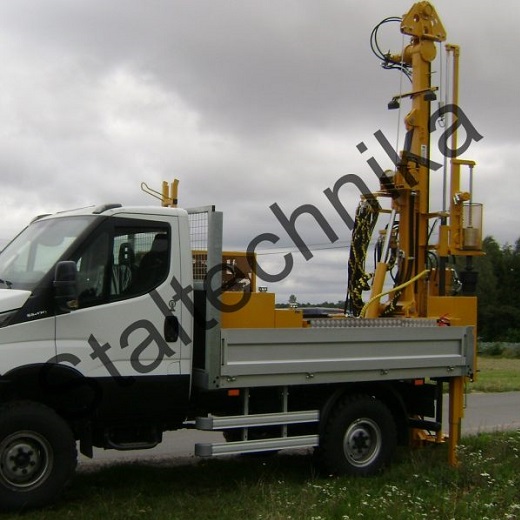
Truck-mounted WPAD 220 water well and heat pump drilling rig
The WPAD drilling rig, designed for vertical drilling, water wells, and heat pumps, enables rotary drilling, casing drilling, and mud drilling, featuring hydraulic controls and an independent power unit.
See more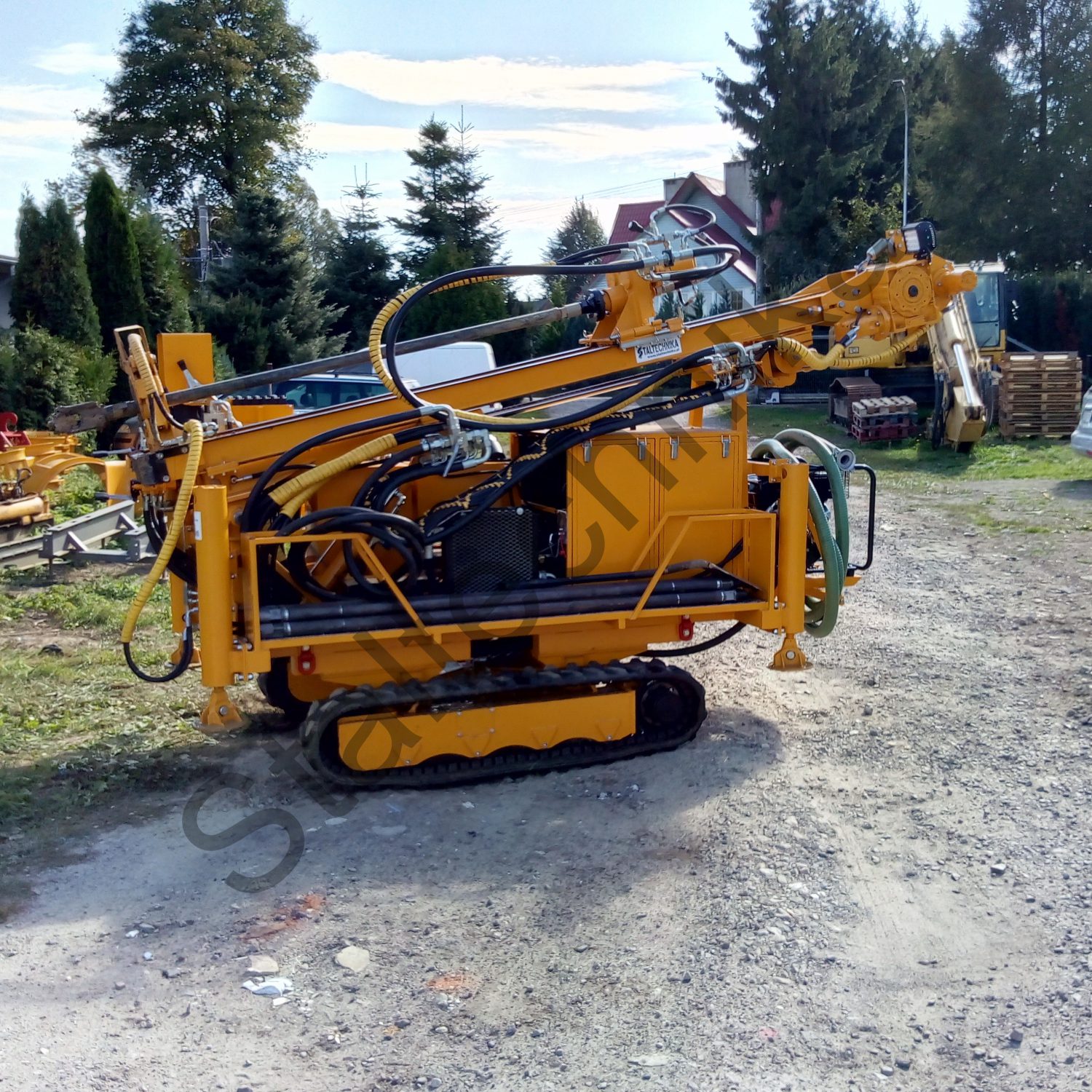
Crawler-mounted WGG-W water well and heat pump drilling rig
The crawler-mounted WGG-W drilling rig for water wells and heat pumps enables auger drilling, casing drilling, and drilling with drill pipes up to a depth of 60 m, featuring a hydraulic drive and equipment for field operations.
See more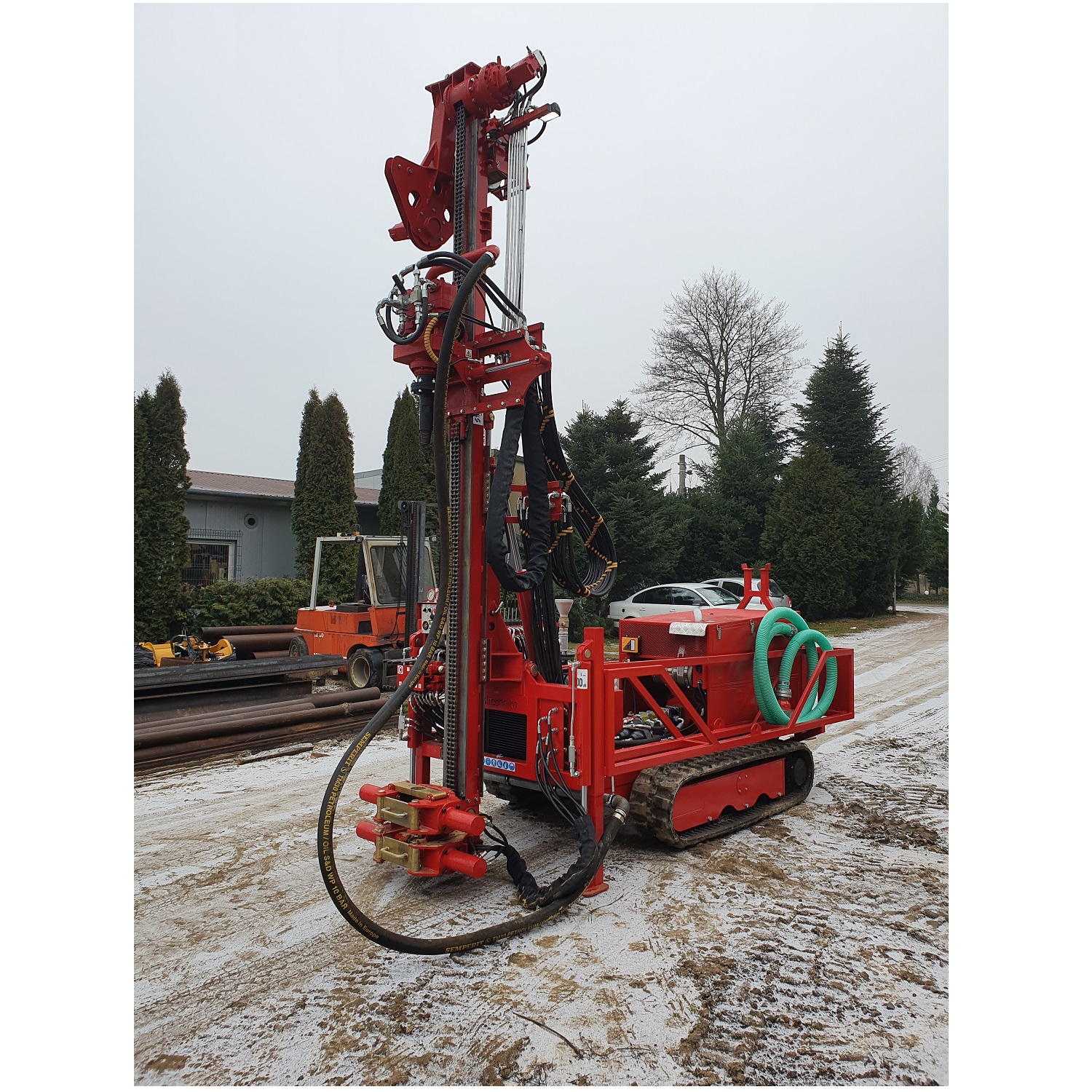
Crawler-mounted WGG-GU/C water well and heat pump drilling rig
The WGG-GU/C is a hydraulic crawler drilling rig designed for geotechnical drilling, micropiles, water wells, and heat pumps, as well as working with steel casings, enabling drilling up to 80-100 m depending on soil conditions.
See more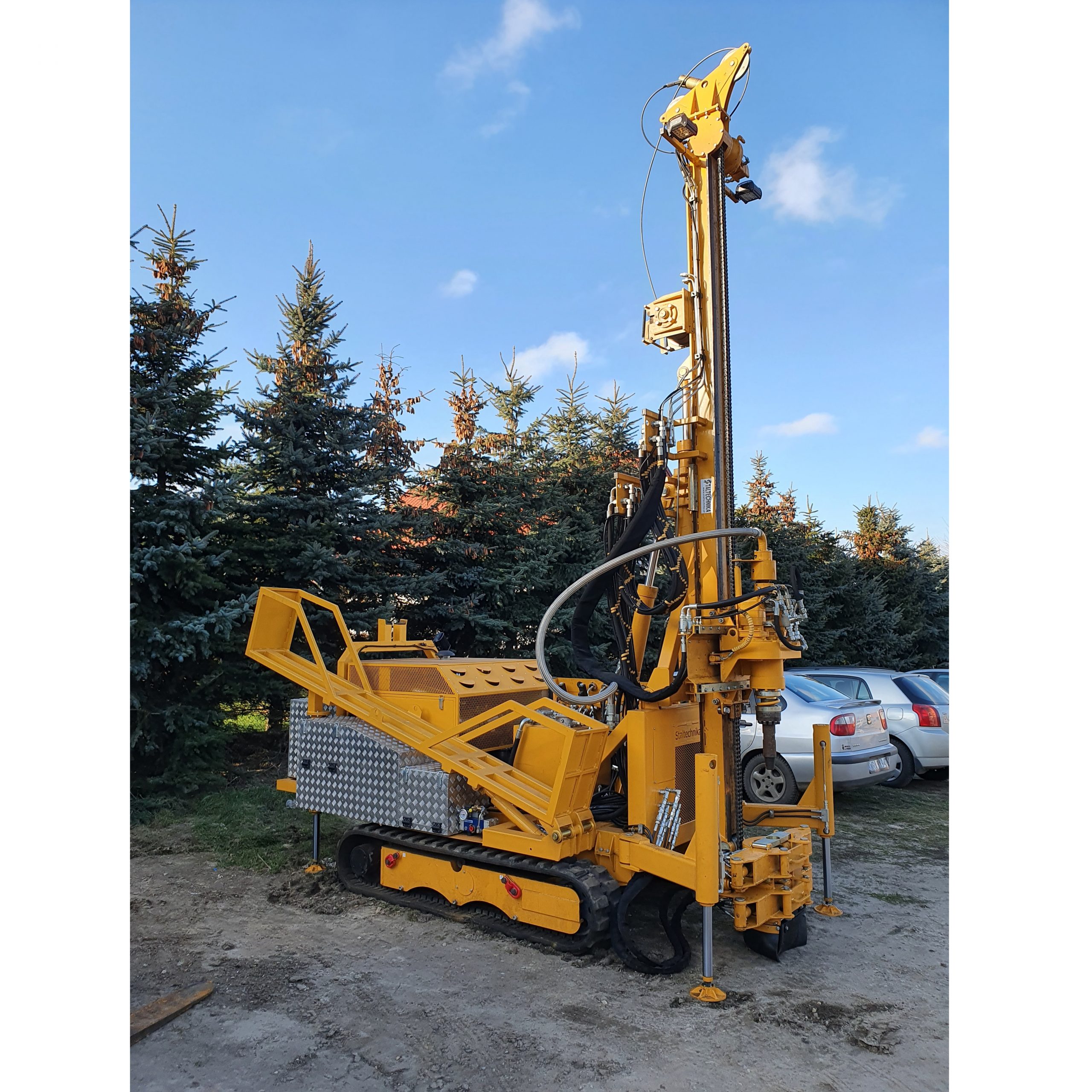
Crawler-mounted WGG-200 water well and heat pump drilling rig
The crawler-mounted WGG-200 drilling rig for water wells and heat pumps enables drilling up to Ø 219 mm and depths up to 200 m, equipped with a two-speed rotary head and a 90 kW hydraulic drive.
See moreHow are water well drilling rigs constructed?
Water well drilling rigs are similar in construction to geotechnical drilling rigs. In addition to the basic components such as the support frame, mast, internal combustion engine, and hydraulic pump, these machines are additionally equipped with devices necessary for deep hole drilling. One such device is the pipe clamp, used for inserting and extracting pipes from the borehole. A practical solution is the use of a two-part clamp, whose upper element serves an unscrewing (break-out) function. Another important tool built into the water well drilling rig is the winch. Using it, the machine operator lowers the bailer into the pipe previously placed in the borehole, down to the level of the spoil. There, the winch’s role is limited to gradually lowering the rope deeper into the borehole, and the bailing winch begins its work. Thanks to the bailing winch’s rotary arm, the bailer suspended on a steel rope is driven into the bottom of the hole. Next, the “bailer” is pulled to the surface using the winch, the spoil is removed, and the entire process can be continued until the desired depth is reached.
Water well drilling rigs feature powerful diesel engines that provide stable drive for the hydraulic pump and power all the devices built into the machine. This is important to achieve the desired machine operating parameters, such as high rotary head torque, appropriate clamping force, or high thrust and pullback forces.
What drilling methods do water well drilling rigs support?
In addition to “dry” drilling, the drilling rig is capable of drilling using the mud drilling method – the “wet” method. The latter involves introducing a medium, such as bentonite, under pressure into the borehole through the drill pipe. Thanks to this, the spoil is flushed to the surface, and the drilling mud can be recovered. On the other hand, “dry” drilling is performed with spiral augers, usually in 1 to 3-meter sections, within casing pipes.
What are the benefits of water well drilling rigs?
The greatest benefit of using water well drilling rigs is undoubtedly the saving of working time. The execution of a drilled deep well compared to a dug one is incomparably faster, which is especially important nowadays. A very significant advantage is also the low physical strain on the operator, whose work, apart from obvious tasks like connecting subsequent auger sections, comes down to operating the control valve levers and activating the desired function of the rig.
See also:



Production:
Majdan Krasieniński 17B
21-025 Niemce
NIP: 9462645865
REGON: 061614861
Monday-Friday: 7.00-15.00